
Before a product reaches its customer, it has already made a journey: materials arrive from a supplier, work takes place in a factory, goods wait in storage and a shipment leaves for its destination. The quality of that journey affects a company’s ability to keep its promises. This is a useful way to understand Khazaen: an economic city where the place of production connects with the roads and services that carry goods to market.
What interests me about Khazaen is the idea of understanding a place through the businesses that could grow there and the relationships it could help them build. Viewed in this context, its free-zone setting becomes part of a wider picture: a location within a network of activities that depend on one another.
Barka on the business map
Khazaen Economic City is located in Barka, South Al Batinah, with access to the Muscat–Al Batinah Expressway. The Public Authority for Special Economic Zones and Free Zones places it geographically within Greater Muscat’s structure plan. This helps explain its position: connected to the capital and its urban expansion, with access to the road network serving ports, airports and land borders.
Khazaen’s official location information puts the city approximately 50 kilometres from Muscat International Airport and 156 kilometres from Sohar Port. These distances help locate it within the transport network. Their significance to a business owner becomes clearer when considered alongside the operation itself: where do materials come from, where are customers based, and how will goods move between them?
For a manufacturer, reliable material deliveries can affect the entire production schedule. For a distributor, the decisive factor may be the ability to organise shipments and serve several destinations. A location deserves to be assessed through the working day, from the first delivery to the final order dispatched. Khazaen’s road connections provide an important starting point for planning that journey.
A free zone within an integrated city
Khazaen includes two free zones within a wider economic city encompassing industrial and logistics activities, commercial and residential components, and a dry port, as its official overview explains. The distinctive feature of the free-zone setting is its place within this varied environment, where production, storage, transport and supporting services can be considered as connected parts of a business operation.
This proximity creates scope for companies to complement one another. A manufacturer needs materials, packaging, maintenance and transport; a service provider needs a customer base whose requirements it can understand and serve consistently. Each successful commercial relationship adds to the usefulness of the location for other businesses. Over time, practical knowledge develops about the market, the needs of different activities and the opportunities worth pursuing.
Consider, for example, a company assembling an industrial product. Its work begins with receiving components, then storing, inspecting, assembling and packaging them before dispatching the finished product to a distributor. Each stage requires a service, a decision or coordination. When an owner assesses premises within a setting that brings complementary activities together, these requirements can be considered as a whole. This illustrates the value of planning an economic city around the relationships between its businesses.
An inland port connected to trade
Khazaen Dry Port gives this picture a practical dimension. It is an inland cargo hub connected by road to seaports, airports and land borders. The services Khazaen lists for the port include customs clearance, customs-bonded storage and cargo consolidation. Some of the functions involved in handling goods therefore extend inland, closer to places of economic activity.
To understand that role, follow what happens to a shipment after it enters the country. It needs procedures, handling, storage and arrangements for its next stage. A specialist provider gives a business options for organising these tasks and deciding which to manage itself and which to entrust to a service partner. In manufacturing, the quality of this coordination can matter as much as the efficiency of the production line.
Industrial incubators and room to grow
Industrial incubators have a place in this wider setting. An entrepreneur may already understand a product and its market, while needing suitable premises to turn that knowledge into a regular operation. An incubator’s value begins with understanding the activity’s requirements and planning the premises around them.
That value becomes clearer in the details an owner needs to assess before operations begin: suitability for equipment, power and ventilation requirements, storage space, and access for deliveries and dispatch. These needs vary between activities, so good development begins with understanding the work that will take place inside the building. Considering them early gives business owners a clearer basis for choosing and preparing premises that serve daily production.
As the business grows, its questions change. An operation that begins with occasional orders may later need regular production, a larger team and more precise control of stock and deliveries. Industrial incubators should be planned with these stages in mind: an appropriate starting space, provision for changing requirements, and connections to the services an operation depends on. In Khazaen, the surrounding industrial and logistics environment gives this idea a practical context, linking each enterprise’s growth with the activity around it.
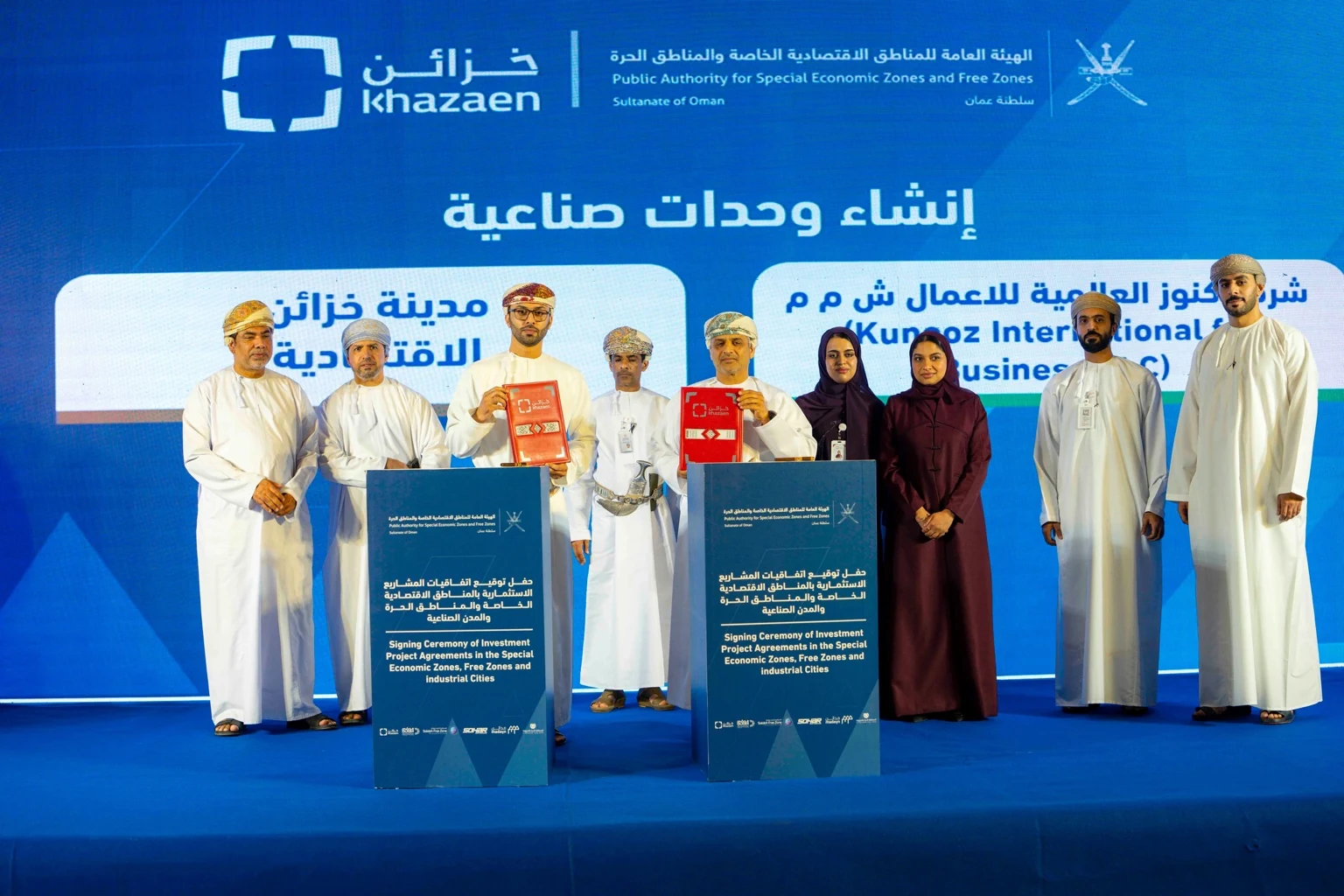
This is the perspective behind Kunooz’s industrial incubators project in Khazaen. Its agreement was signed at the Public Authority for Special Economic Zones and Free Zones ceremony in Muscat, which brought together 28 investment agreements, according to Oman News Agency coverage. For me, the significance lies in contributing premises for production within a setting that connects industry with logistics.
Our ambition is to put these principles into practice throughout the project’s development. Tenants will judge the premises through their working day, their ability to carry out their activities and the suitability of the space as their businesses develop.
The businesses a place makes possible
I appreciate the efforts of the Public Authority for Special Economic Zones and Free Zones and the Khazaen Economic City team in developing this environment and helping investment move forward. Cooperation between the relevant authorities, developers and business owners requires sustained coordination to translate location and infrastructure into projects that can operate.
What makes Khazaen worth following is this connection between place and activity: a road leading to a market, a dry port organising a shipment, and premises allowing an entrepreneur to begin production. Each business that finds a suitable home strengthens the city’s role in the everyday economy. That is the opportunity I look forward to: Khazaen becoming a place from which products and businesses establish their presence in Oman and beyond.
Continue the conversation
Have an opportunity or perspective to share? I welcome a clear introduction.